
Choosing Walking Boots for Muddy Towpaths
Why Towpaths Punish the Wrong Footwear
Canalside walking has a reputation for being easy. The map shows a flat ribbon of path beside the water, the pub at the halfway point is marked, and there is nowhere to get lost. What the map does not show is the surface underfoot. A single mile of British towpath can hand you greasy clay, wet stone setts, a slick timber lock gate, exposed tree roots and puddles deep enough to swallow an ankle.
Riverside and lakeside paths are no gentler in wet weather. Lakeshore trails around Windermere or Derwentwater turn to a mixture of gravel and peat, and the margins stay damp long after a dry spell. A lightweight trail shoe that felt perfect in July will leave you skating in November. The boots you want are built for the shoulder seasons, and choosing them comes down to three things: waterproofing, tread and support.
Waterproof Uppers: Keeping the Canal Out
Wet feet will ruin a walk faster than almost anything else, and canal water is cold, gritty and slow to drain. Look for a boot with a waterproof and breathable membrane, sealed or taped seams, and a rubber rand around the toe and heel where you kick through puddles and scuff against lock gates.
- Waterproof and breathable membrane — keeps canal water out while letting sweat vapour escape. Without breathability, your boots fill with condensation instead.
- Bellows tongue — the tongue is the classic leak point. A gusseted, bellows-style tongue stops water running straight down onto your socks.
- Rubber rand — protects the upper from stone setts, grit and the metal edging of lock gates.
- Full-grain leather or a tough synthetic — leather takes longer to wet out but lasts years if you look after it; synthetics dry faster and weigh less.
Waterproofing has a limit, of course. Step into a puddle deeper than the collar and the water comes in over the top. That is the main argument for a mid-height boot over a low shoe: a couple of extra inches of collar buys you a great deal of comfort on a flooded towpath.
Deep Tread: Staying Upright on Wet Clay
Towpath mud is a peculiar substance. It is fine-grained, sits on top of a hard base, and behaves like grease on a slope. Shallow, closely packed lugs clog within a hundred yards and then slide as smoothly as a flat sole. Look for lugs roughly four to five millimetres deep, spaced widely enough to shed mud rather than hold it.
No single tread suits every surface, so weigh up the mix you actually walk:
- Clay and silt — wide, deep, self-clearing lugs, and a softer rubber compound that stays grippy in the cold.
- Wet timber and lock gates — nothing grips these perfectly, so approach at a slight angle and keep your steps short.
- Stone setts and cobbles — a slightly harder compound with a broader contact area so you are not balanced on the tips of individual lugs.
- Roots, gravel and grass verges — a moderately soft compound with a defined heel brake for descents into lock flights.
If you walk the same stretch every week, note where you slip. Buy boots for that, not for the gentlest section.
Ankle Support and a Fit That Lasts the Whole Walk
Towing paths are rarely level. They camber towards the water, break up into ruts where vehicles have cut them up, and drop away at the edges. Mid-height boots with a reasonably stiff heel counter and a shank under the arch take some of that work away from your ankles — and they give you a fighting chance if you roll sideways on a wet lock gate.
- Get measured late in the day, when your feet are at their largest, and wear the socks you will walk in.
- Allow a thumb's width between your longest toe and the front of the boot to protect your toes on descents.
- Use heel-lock lacing to pull your heel back into the boot and stop it rubbing on the climb out of a lock flight.
- Check the flex point — the boot should crease where your foot bends, not across your toes.
- Size up half a size if you will wear thick winter socks or add a thin liner.
Socks, Care and Seasonal Adjustments
Socks do half the work. A merino or synthetic blend wicks moisture and keeps its loft when damp; cotton holds water against the skin and invites blisters. Take a spare pair in a dry bag for days when the towpath is ankle-deep, and change at the halfway pub — your feet will thank you for the second half.
Look after the boots and they will look after you. Rinse off canal silt and grit after every walk, because it grinds away at stitching and membrane alike. Let leather dry slowly at room temperature, never on a radiator, and stuff newspaper inside to draw out moisture. Re-proof the uppers with a suitable wax or water-repellent treatment each season, and pay attention to the toe flex area, which is usually the first place to start taking on water.
Finally, adjust for the season. In summer a lighter, more breathable boot is a pleasure on dry towpaths; from autumn through to early spring, the heavier, stiffer, more aggressively treaded option earns its place on your feet every single time.
tag: Outdoor Gear

Priya Nair Author
Buy the correct rod licence, check closed seasons and follow club bylaws before casting on rivers, canals or stillwaters.
YOU MAY ALSO LIKE
Understanding Fishing Licences and Local Rules
Jul 13
10Explore the remains of watermills, sluices and weirs that once powered rural industries and shaped the flow of local rivers.
read more
Historic Mills and Weirs on British Rivers
Jul 9
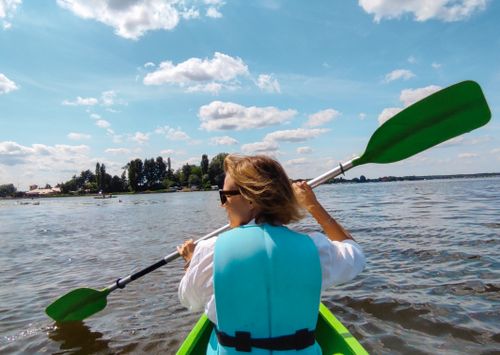
10Choose calm lakes or gentle canal stretches with nearby parking, toilets and launch points suitable for beginners and young paddlers.
read moreRiver Walks
-

ERRIC CATONA
Find a towpath pub with outdoor seating, real ale and a relaxed atmosphere where walkers and boaters can rest awhile.
May 19, 2016 at 5.12 pm
Reply
ERRIC CATONA
Plan a gentle riverside stroll with children by checking path surfaces, weather forecasts, access points and nearby facilities before setting out.
May 19, 2016 at 5.12 pm
Reply -
ERRIC CATONA
Identify currents, eddies, weirs and hidden obstacles by studying the water surface and banks before launching your kayak or canoe.
May 19, 2016 at 5.12 pm
Reply
Wildlife
Your email address will not be published.