
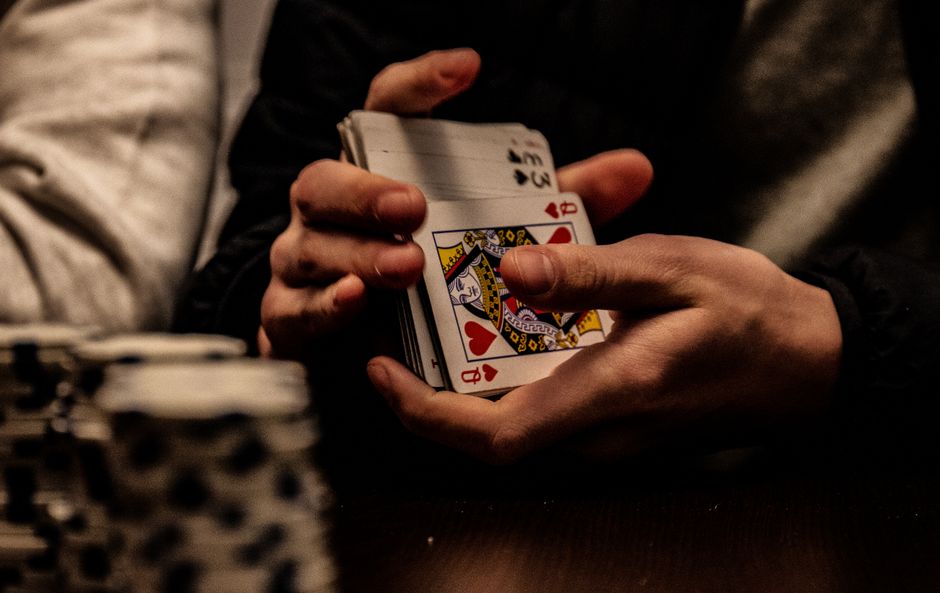
The Real Difference Between Winning and Losing at Online Casinos
Every gambler remembers their biggest win. Almost nobody remembers the fifty sessions that came before it. That asymmetry — the way a single hot streak burns brighter in memory than a dozen cold ones — is the engine that keeps the entire iGaming industry running. Understanding it won't make you rich, but it will make you a sharper player than 90% of the people sitting at the virtual tables.
The House Edge Is Real, But It's Not Uniform
Let's start with the number nobody wants to talk about. Every casino game has a mathematical edge baked into it, and that edge varies wildly depending on what you're playing. Blackjack with basic strategy? Around 0.5% if you find a good table. European roulette? 2.7%. American roulette, the one with the double zero? A brutal 5.26%. And slots? Somewhere between 2% and 10%, depending on the machine and the jurisdiction. More background can be found at keonhacaii5.com.co.
That gap matters more than most players realize. If you cycle $10,000 through European roulette over a weekend, you're expected to lose $270. Do the same on a double-zero table and that jumps to $526 — nearly double the pain for the exact same entertainment. Same green felt, same spinning ball, twice the bleed.
Slots are trickier because the edge is hidden inside the RTP (return to player) figure. A slot advertised at 96% RTP is keeping 4 cents of every dollar wagered. That sounds fine until you realize you can spin 600 times an hour. Do the math on a $1 spin and you're theoretically handing over $24 an hour just to watch the reels turn.
Volatility: The Variable Nobody Talks About
Two slots can have identical RTP and feel completely different. That's variance at work — how the wins are distributed. Low-volatility slots pay small amounts frequently. High-volatility slots pay rarely but can hit enormous multipliers. Neither is "better." They just suit different bankrolls and different temperaments.
- Low volatility: Think classic 3-reel fruit machines. Wins every 5-10 spins, but a 50x multiplier is a big deal.
- Medium volatility: The sweet spot for most players. Wins roughly every 20-30 spins, with occasional 100x-500x hits.
- High volatility: Gates of Olympus territory. You might go 200 spins without a sniff. Then a single bonus round pays 2,000x.
The practical takeaway: if you have a $100 bankroll and want a session that lasts two hours, playing a high-volatility slot at $2 a spin is self-sabotage. You'll be broke in twenty minutes. The math doesn't care about your feelings.
Where Skill Actually Matters
Most casino games are pure luck with a negative expected value. Poker is the exception. In poker, you're not playing against the house — you're playing against other people, and the house just takes a rake. That changes everything.
If you're the seventh-best player at a nine-handed table, you're printing money over the long run. If you're the ninth-best, you're the fish. This is why the same player can win consistently at $1/$2 no-limit Hold'em and lose consistently at $5/$10 — the competition scales faster than the stakes.
There are three skills that separate winning poker players from losing ones:
- Position awareness. Acting last preflop and postflop is worth more than most beginners realize. You get information before you commit chips. That's an edge you can exploit every single hand.
- Bankroll management. Even a 60% winner will have losing sessions. The standard rule for cash games is 20 buy-ins minimum — 40 if you're playing professionally or can't stomach variance.
- Hand reading. Not guesses based on gut feelings, but ranged thinking. What hands could villain realistically have given the action on each street? If the answer is "only sets and two pair," folding top pair is correct more often than it feels.
Blackjack offers a narrower skill edge. Basic strategy — the mathematically optimal play for every hand combination — cuts the house edge to roughly 0.5% on a good six-deck shoe. Card counting can flip the edge in your favor, but only with perfect execution, proper bet sizing, and the ability to avoid detection. It's a grind, not a movie.
The Mental Game Is the Whole Game
Tilt kills more bankrolls than bad luck ever will. Tilt is what happens when emotion overrides reason — when you double your bet size after a bad beat because you're "due," or when you play a slot you can't afford because you're chasing a loss.
The pros handle this with hard rules. Session limits. Loss limits. Time limits. Written down before the first hand, not decided in the heat of the moment. If you say you'll stop at -$200, you stop at -$200. No exceptions, no "one more spin."
Here's a test: after a losing session, do you feel angry at the game, at yourself, or neutral? If it's anger, you're playing with money you can't afford to lose. That's not a strategy problem. That's a warning sign, and the only right response is to step away.
The Bottom Line on the Bottom Line
Nobody beats the house at slots or roulette long-term. Not you, not me, not the guy on YouTube claiming he cracked the code. The casino industry is built on a mathematical guarantee, and that guarantee doesn't have exceptions. What you can do is minimize the edge against you, choose games where skill matters, manage variance smartly, and treat the whole thing as entertainment with a cost — not an investment with a return.
The players who last are the ones who understand that. They set a budget, play games with decent odds, take their shots, and walk away whether they're up or down. The ones who don't last are chasing something that was never there. The reel doesn't care about your mortgage. The deck doesn't know your name. Play like you know that, and you'll have a hell of a lot more fun — and lose a hell of a lot less.
tag: iGaming

Emily Hart Author
Identify currents, eddies, weirs and hidden obstacles by studying the water surface and banks before launching your kayak or canoe.
YOU MAY ALSO LIKE
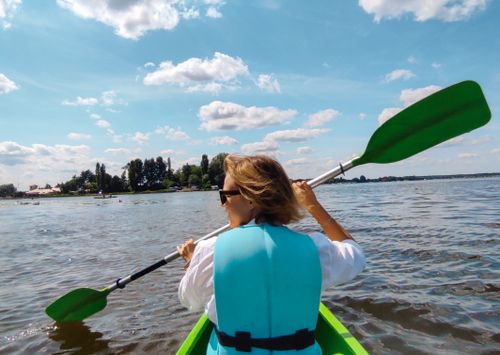
How to Read a River Before You Paddle
Sep 21
10Match rod length, test curve and reel size to the stillwaters or slow rivers you plan to fish, then budget for line and hooks.
read more
Choosing a Beginner Coarse Fishing Rod Setup
Sep 16
10Learn how to share towpaths, avoid blocking winding holes and keep noise low when mooring beside other canal boats overnight.
read moreRiver Walks
-

ERRIC CATONA
Increase your chances of seeing a flash of blue by sitting still near shaded bends and listening for a sharp, high-pitched call.
May 19, 2016 at 5.12 pm
Reply
ERRIC CATONA
Look for pubs with grassy banks, shaded tables and easy river access so families and walkers can relax over a simple ploughman's lunch.
May 19, 2016 at 5.12 pm
Reply -
ERRIC CATONA
Discover how canals and rivers once carried coal, timber and grain, shaping towns, locks and wharves across the countryside.
May 19, 2016 at 5.12 pm
Reply
Wildlife
Your email address will not be published.